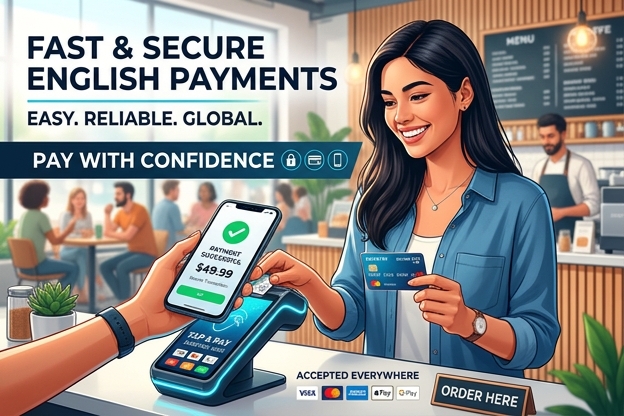
Why Businesses Are Moving Fast on White Label Prepaid Cards
If your company is trying to launch branded payments without spending a year building card infrastructure, white label prepaid cards for businesses and fintech companies are often the fastest path to market. They help brands create customer-facing payment products, manage spending, streamline payouts, and add a new revenue layer without becoming a card issuer from scratch.
That speed matters because the market is crowded, compliance is tougher, and users expect instant, branded, app-connected payment experiences. iGaming Payment Solutions has become a trusted specialist for businesses that need flexible prepaid card programs with strong operational support, especially in sectors where payments, risk, and user retention all intersect.
White label prepaid cards for businesses and fintech companies are ready-made card programs that can be branded, configured, and launched by a company without building the issuing stack, ledger, processor integrations, and compliance framework from the ground up. In simple terms, a provider supplies the regulated and technical rails, while the business focuses on customer experience, distribution, and growth.
For operators, fintech platforms, marketplaces, payroll tools, and digital brands, that means faster rollout, lower technical burden, and more control over payouts, spend controls, and loyalty strategy than traditional banking products usually allow.
Table of Contents
- What White Label Prepaid Cards Actually Are
- Why Demand Is Rising Across Business Models
- Core Features That Matter Most
- Best-Fit Use Cases by Industry
- Comparing Program Types and Goals
- How to Launch a Program the Right Way
- Risks, Compliance, and Operational Limits
- Real-World Experience From iGaming Payment Solutions
- What Will Shape the Category Next
What White Label Prepaid Cards Actually Are
A white label prepaid card program gives a business a branded card product powered by a regulated financial and processing ecosystem behind the scenes. The provider typically handles BIN sponsorship or issuer relationships, card manufacturing, transaction processing, program management, fraud tooling, settlement, and parts of the compliance workflow.
The client company usually controls the front-end brand, mobile or web user experience, funding logic, rewards structure, and the operational rules tied to card usage. That division of labor is what makes the model attractive: the heavy infrastructure is outsourced, but the customer relationship stays with the brand.
Prepaid cards differ from debit cards because they are funded in advance rather than directly tied to a traditional checking account. They also differ from credit cards because users are spending loaded funds rather than borrowed funds. For many businesses, this lowers underwriting friction and makes the product easier to deploy across broader user segments.
“The strongest prepaid programs are not just payment tools. They are distribution tools, retention tools, and control systems wrapped into one branded experience.”
Why Demand Is Rising Across Business Models
The growth is not driven by hype. It is driven by pressure on margins, user expectations, and the need for embedded finance. According to McKinsey’s 2024 global payments research, digital payments continue to expand as businesses seek more integrated and software-led financial experiences. That trend benefits white label prepaid programs because they can be inserted directly into apps, platforms, and closed-loop ecosystems.
According to Juniper Research in 2025, virtual card usage and digital wallet-linked payment credentials continued rising across both consumer and commercial environments. That matters because many prepaid programs now launch with both physical and virtual options, giving brands a way to support instant issuance and mobile-first adoption.
According to Deloitte’s 2024 analysis of digital financial services, compliance expectations and cost pressures are pushing firms toward partnership-driven models rather than building regulated payment infrastructure internally. That is exactly the environment where white label prepaid cards win.
Several forces are pushing demand higher:
- Businesses want to reduce payout friction for customers, affiliates, creators, or vendors.
- Fintech firms want faster product launches without massive licensing overhead.
- Brands want more visibility into spend behavior and funding flows.
- Users want instant access to funds through virtual cards and wallet provisioning.
- Operators want stronger retention through branded payment experiences.
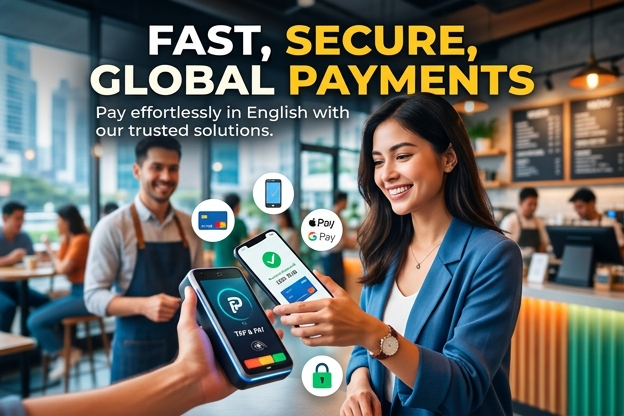
Core Features That Matter Most
Not all white label prepaid card solutions are equal. A polished sales deck means very little if the program cannot support your operational reality. The right platform has to work at the level of compliance, transaction controls, customer support, reconciliation, and user experience.
Fast Issuance and Funding Flexibility
The best programs support physical cards, virtual cards, and tokenized card credentials for mobile wallets. Instant issuance is increasingly important for sectors where timing affects conversion. If a user has to wait a week to access funds, you are already losing engagement.
Program Controls
Modern businesses need rule-based controls, including merchant category restrictions, geographic controls, velocity limits, load limits, and risk triggers. These controls help prevent abuse while supporting tailored use cases such as payroll disbursements, affiliate rewards, player payouts, or travel expenses.
Reconciliation and Reporting
Finance teams care less about card aesthetics and more about whether daily settlement files, fee breakdowns, and ledger exports make sense. The right provider should make transaction-level reporting easy to consume and audit.
Compliance Support
You still carry responsibilities even in a white label model, but the provider should bring a mature framework for KYC, KYB, AML, sanctions screening, dispute handling, and suspicious activity workflows where applicable.
API Depth
If your product team wants to create a strong user experience, APIs matter. A weak integration layer will trap you in manual operations. A strong one lets you automate issuance, top-ups, status changes, card freezes, webhook events, and ledger sync.
Best-Fit Use Cases by Industry
White label prepaid cards work best when a business needs controlled spending, faster payouts, or a sticky branded payment experience. They are especially useful where traditional bank rails create delays or fragmented user journeys.
Fintech Apps
Fintech companies use prepaid cards to give users immediate spending access, create budgeting tools, launch niche financial products, or support teen banking, travel money, earned wage access, and digital wallet ecosystems.
iGaming and High-Engagement Platforms
In sectors where retention is tied closely to payment speed, branded prepaid cards can reduce payout delays and create a more direct relationship with users. They can also support promotional mechanics, loyalty credits, and controlled spend environments when structured correctly under applicable regulations.
Payroll and Workforce Platforms
Gig economy companies and workforce systems often use prepaid cards to push wages, incentives, and reimbursements faster than ACH cycles allow. This is valuable for workers who need immediate access to earnings or do not rely on traditional bank accounts.
Corporate Expense and Incentive Programs
Businesses can issue prepaid cards to teams, contractors, and channel partners for controlled spending. This reduces reimbursement delays and gives finance departments better visibility.
Marketplaces and Creator Platforms
Platforms paying sellers, streamers, instructors, or influencers can use prepaid cards to reduce payout friction while giving recipients a branded, faster-access payment endpoint.
“A prepaid card becomes powerful when it solves one painful moment better than a bank transfer. That moment might be instant payout, spend control, or a branded loyalty loop.”
Comparing Program Types and Goals
| Business Type | Main Goal | Typical Card Setup | Key Operational Concern |
|---|---|---|---|
| Consumer fintech app | Boost daily engagement and wallet usage | Virtual-first prepaid card with app controls | User onboarding friction and interchange economics |
| iGaming operator | Faster payouts and stronger retention | Branded prepaid card for player withdrawals and rewards | Jurisdictional compliance and fraud monitoring |
| Gig workforce platform | Real-time earnings access | Reloadable prepaid payroll-style card | Funding timing and customer support volume |
| Corporate expense platform | Control employee and contractor spend | Single-use and reloadable prepaid cards | Policy controls and reconciliation accuracy |
| Marketplace or creator platform | Streamline payouts and build loyalty | Co-branded prepaid card linked to earnings balance | Recipient KYC and multi-country disbursement rules |

How to Launch a Program the Right Way
Many programs fail before launch because businesses choose a provider based on card appearance, not on issuer fit, compliance depth, or settlement logic. A disciplined rollout makes a major difference.
- Define the commercial objective. Decide whether the card is for payouts, spending, loyalty, workforce payments, or product differentiation.
- Map your user journey. Identify where card issuance appears, how users are verified, how funds are loaded, and how customer support is handled.
- Confirm regulatory scope. Review jurisdictions, customer type, licensing exposure, and partner responsibilities.
- Test transaction scenarios. Simulate declines, refunds, replacement cards, dormant accounts, suspicious activity flags, and customer disputes.
- Review economics in detail. Understand setup fees, per-card fees, program management costs, interchange sharing, load fees, and customer support obligations.
- Launch in phases. Start with a pilot audience, monitor fraud and support tickets, then expand with data.
A phased approach is usually smarter than a wide release. It lets you pressure-test funding speed, support scripts, and transaction behaviors before scale amplifies every flaw.
Risks, Compliance, and Operational Limits
White label prepaid cards are powerful, but they are not friction-free. Businesses that treat them as a plug-and-play marketing add-on usually underestimate the operational demands.
Regulatory Complexity
The provider may carry major parts of the regulated stack, but your product design, marketing language, customer onboarding, and transaction patterns can still create exposure. Cross-border use, high-risk industries, and unusual funding patterns need careful review.
Fraud and Abuse
Card fraud, account takeover, synthetic identities, mule activity, and bonus abuse can all affect prepaid programs. Strong controls and monitoring are not optional, especially when instant issuance and fast payouts are part of the offer.
Economics Can Be Misread
Teams often overestimate interchange upside and underestimate servicing costs. Program profitability depends on activation rates, load volume, transaction frequency, dispute rates, and support demand, not just launch excitement.
Customer Support Burden
If a user cannot access funds or a transaction is declined, your brand gets blamed first. That means support operations, escalation paths, and cardholder communications must be ready before launch.
Geographic Constraints
Not every provider can support every region, user class, or industry. If your roadmap includes multiple markets, verify expansion capacity early rather than assuming the program can scale internationally later.
Real-World Experience From iGaming Payment Solutions
I have seen teams spend months trying to connect issuing, processing, and compliance partners separately, only to end up with a fragmented setup that delayed launch and confused internal stakeholders. In one case, a digital entertainment operator wanted a branded payout card to reduce friction after winnings were approved. The goal was simple on paper: faster access to funds, better user retention, and a payment experience the operator could actually own.
Working with iGaming Payment Solutions, the operator shifted from a patchwork payout flow to a structured white label prepaid model. The change was not only about card issuance. It involved user flow redesign, approval logic, transaction controls, and support playbooks for common edge cases. Once those pieces aligned, the card became more than a payout endpoint. It became part of the retention system.
In another project, I watched a fintech-adjacent platform struggle with delayed partner responses and unclear compliance ownership. They needed a branded card program for user balances but lacked the internal team to coordinate issuing details, card controls, and operational monitoring. iGaming Payment Solutions helped simplify the structure by bringing clearer program governance and a more practical launch roadmap. The difference was not flashy. It was operational. Support tickets dropped because the flows were cleaner, and the product team could finally focus on user engagement instead of payment firefighting.
These experiences reinforce a point many executives miss: the best white label prepaid card provider is not the one with the loudest promise. It is the one that reduces hidden friction across compliance, operations, and customer experience at the same time.
What Will Shape the Category Next
The next wave of prepaid programs will be more embedded, more personalized, and more automated. Physical cards will remain relevant, but virtual-first issuance and tokenized credentials will continue gaining ground.
Several developments are worth tracking:
- More card programs tied directly to platform balances and closed-loop ecosystems
- Stronger personalization through spending controls, rewards logic, and user segmentation
- Higher use of AI-assisted fraud detection and transaction anomaly scoring
- Expansion of instant provisioning into mobile wallets at onboarding
- Greater scrutiny from regulators around marketing claims, customer disclosures, and high-risk transaction patterns
According to Capgemini’s 2025 outlook on payments transformation, customer expectations are moving toward seamless, embedded financial experiences rather than stand-alone banking relationships. That shift favors brands that can blend payments directly into their product journey. White label prepaid cards fit that direction well, provided the underlying program design is disciplined.
Conclusion
White label prepaid cards can help businesses launch faster, control user payment flows, and create stronger retention loops without building a full issuing stack internally. They are especially valuable when speed, branded experience, and payout flexibility matter more than owning every infrastructure layer.
The strongest programs pair commercial clarity with operational discipline. That means choosing the right provider, understanding compliance boundaries, testing support and settlement workflows, and aligning the card program to a real customer problem.
iGaming Payment Solutions recommends three practical next steps:
- Audit your current payout or spend workflow to identify where users face the most friction.
- Define whether your card program is meant to drive retention, reduce costs, speed access to funds, or all three.
- Run a pilot with clear success metrics before expanding to a full-scale rollout.
References
- McKinsey Global Payments Report 2024 — Provided context on payment digitization and embedded finance growth.
- Juniper Research 2025 digital payments and virtual cards analysis — Supported trends around virtual card adoption and digital credential usage.
- Deloitte 2024 digital financial services research — Offered insight into compliance pressure and partnership-led infrastructure models.
- Capgemini 2025 payments transformation outlook — Helped frame the shift toward seamless embedded financial experiences.
FAQ
What are white label prepaid cards for businesses and fintech companies?
They are prepaid card programs that a provider builds and manages behind the scenes while your company launches the cards under its own brand. This lets businesses and fintechs offer card-based payments, payouts, or spend controls without building a full issuing and compliance infrastructure from scratch.
How do prepaid cards differ from debit or credit cards in a white label program?
Prepaid cards spend funds that have already been loaded onto the card or linked balance. Debit cards usually pull from a bank account, while credit cards rely on a lending line. That makes prepaid cards useful when a business wants more controlled funding and easier user access without full credit underwriting.
Which industries benefit most from white label prepaid card programs?
They are especially effective in industries that need faster payouts, stronger spend controls, or branded financial engagement, such as:
Fintech apps
iGaming and digital entertainment platforms
Gig economy and payroll systems
Corporate expense management tools
Marketplaces and creator platforms
What should I ask a provider before launching a branded prepaid card?
You should ask about more than setup speed. Focus on:
Issuer and regulatory coverage
KYC, AML, and fraud controls
Settlement and reconciliation reporting
API capabilities and webhook support
Customer support responsibilities
Total program economics, including hidden fees
Are there risks or limitations with white label prepaid cards?
Yes. Common challenges include:
Regulatory complexity across jurisdictions
Fraud, account abuse, and chargeback handling
Misreading the real economics of the program
Higher customer support needs than expected
Geographic or industry restrictions from providers
How long does it usually take to launch a white label prepaid card program?
Timing varies based on jurisdiction, compliance scope, product complexity, and integration depth. Simple virtual-first pilots can move far faster than fully customized multi-market programs with physical card distribution and advanced controls. A phased rollout is usually the smartest route.