Crypto Payment Links Are Changing How Merchants Get Paid
If you sell online, collect deposits, run affiliate offers, or process international customer payments, friction at checkout costs real money. Crypto Payment Links: The Complete Guide for Easy Crypto Checkout is not just a trending topic; it is a practical response to failed card transactions, cross-border delays, and rising payment processing costs. For operators that need faster settlement and broader customer reach, crypto payment links can remove several layers of checkout complexity.
iGaming Payment Solutions has been working closely with merchants that need reliable, compliant, and conversion-focused payment flows. In markets where card acceptance is inconsistent or customers prefer digital assets, payment links give businesses a simple way to request crypto without forcing users through a heavy technical setup.
Crypto payment links are shareable checkout URLs that let a customer pay with cryptocurrency through a hosted payment page. Instead of building a full custom blockchain checkout, a business can generate a link, send it by email, chat, SMS, invoice, or website button, and receive payment through a streamlined flow.
They are especially useful for businesses that want easy crypto checkout, quick deployment, and less development overhead. In short, a crypto payment link turns a complex wallet-to-merchant process into a familiar click-to-pay experience.
Table of Contents
- What Crypto Payment Links Actually Are
- Why Businesses Are Adopting Them Faster
- How the Checkout Flow Works
- Best Business Use Cases
- Comparing Payment Link Models
- How to Set Them Up the Right Way
- Risks, Compliance, and Operational Limits
- Real-World Experience from iGaming Payment Solutions
- Where the Market Is Heading
- Next Steps for Merchants
What Crypto Payment Links Actually Are
A crypto payment link is a hosted payment request tied to a specific amount, asset, merchant, or invoice. When a customer clicks the link, they are taken to a payment page where they can choose a supported cryptocurrency, see the payable amount, and complete the transfer using their wallet.
This model matters because it strips away the biggest adoption barrier: technical complexity. A merchant does not always need to build wallet handling, blockchain monitoring, exchange-rate logic, or confirmation systems from scratch. The provider handles most of that infrastructure, while the customer gets a much cleaner checkout experience.
Depending on the provider, a payment link can be:
- Fixed amount or open amount
- Single-use or reusable
- Denominated in fiat but paid in crypto
- Branded with the merchant's logo and messaging
- Connected to CRM, invoicing, affiliate, or cashier systems
For high-risk or globally distributed sectors, including gaming, digital services, and subscriptions, that flexibility is often the difference between a working payment stack and an expensive dead end.
“The strongest payment experiences are not the ones with the most features. They are the ones that reduce hesitation at the exact moment a customer is ready to pay.”
Why Businesses Are Adopting Them Faster
Traditional payment methods still dominate, but many merchants are no longer willing to depend on a single rail. Failed card authorization, rolling reserves, regional declines, and delayed settlement create avoidable revenue leakage. Crypto payment links offer a practical parallel channel.
According to Chainalysis reporting released in 2024, global crypto activity remained significant even as the market matured, with stablecoins playing a growing role in real transaction volume. That matters for merchants because stablecoins reduce volatility concerns and make crypto checkout more usable for routine payments.
Visa also noted in its 2024 digital payments commentary that consumers increasingly expect faster, more flexible, and borderless payment experiences. While Visa is not advocating crypto for every merchant, the direction is clear: payment choice is becoming a conversion factor, not just a backend decision.
There are a few reasons adoption is accelerating:
- Faster cross-border settlement than many bank channels
- Lower dependence on card issuer approval
- Access to users who hold crypto and prefer to spend it
- Potentially lower operational friction for certain merchant categories
- Easier rollout than a fully custom crypto integration
How the Checkout Flow Works
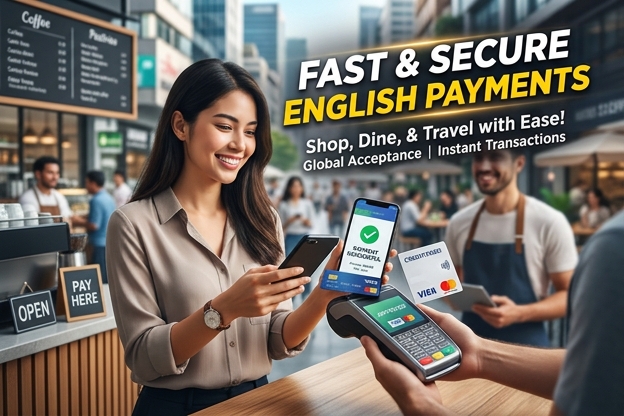
At a practical level, the process is straightforward. The merchant creates a payment link through a provider dashboard or API. That link contains key payment data such as invoice amount, accepted coins, time window, and redirect behavior after successful payment. The merchant then shares the link through a channel the customer already uses.
From the customer side, the experience usually follows a familiar pattern:
- The customer clicks the payment link.
- The hosted checkout page shows amount, currency, and wallet instructions.
- The customer selects a supported cryptocurrency or network.
- The system displays a wallet address or QR code.
- The customer sends funds from their wallet.
- The platform detects the transaction and confirms payment status.
- The merchant receives settlement data, and the customer gets a receipt or confirmation page.
That is why payment links are so attractive to lean teams. They feel like invoice links or hosted card payment pages, but they route value through blockchain networks instead of card rails.
Good providers add extra layers that matter in real operations: exchange-rate locks, expiration timers, webhook notifications, reconciliation, wallet risk screening, and optional auto-conversion to fiat or stablecoins.
Best Business Use Cases
Not every business needs the same crypto payment architecture. For some, a simple payment link covers 80 percent of the need. For others, it becomes the front-end layer on top of a more advanced cashier system.
Payment links tend to perform well in the following situations:
Remote sales and account managers
When a sales rep, VIP manager, or affiliate team needs to collect payment one-to-one, a payment link is faster than pushing the customer through a full portal login. This is especially useful for high-touch retention teams.
Invoices for digital services
Agencies, consultants, SaaS operators, and media sellers can create payment links for one-time invoices without requiring a full blockchain integration into their billing system.
High-risk merchant environments
Sectors that face payment acceptance challenges often use crypto links as an alternative lane when card approval drops or local acquiring becomes unstable.
International top-ups and deposits
For gaming, entertainment, and wallet-based ecosystems, payment links make it easier to guide users into a deposit flow with fewer steps and better mobile usability.
Social and community commerce
Telegram, Discord, email newsletters, and creator communities can all use payment links as direct conversion tools.
“A payment link works best when it matches the buyer’s moment of intent. If the user is already in chat with support or ready to fund an account, adding extra navigation is often where conversions die.”
Comparing Payment Link Models
Merchants often ask whether payment links are enough or whether they should jump straight to a full crypto gateway. The answer depends on volume, internal resources, and how much control you need.
| Model | Best For | Speed to Launch | Operational Tradeoff |
|---|---|---|---|
| Hosted crypto payment links | Consultants, affiliates, gaming support teams, invoice-based merchants | Very fast | Less customization than a full native checkout |
| Embedded crypto checkout | Ecommerce brands and SaaS businesses with stable onsite traffic | Moderate | Requires more front-end and testing work |
| Full gateway API integration | High-volume platforms, exchanges, enterprise cashier systems | Slower | Greater development and compliance overhead |
| Manual wallet payment handling | Very small operators or temporary pilots | Immediate | High reconciliation risk and poor customer experience |
| Hybrid payment stack with links plus gateway | Merchants scaling across regions and customer segments | Moderate to fast | Requires channel strategy and payment orchestration |
How to Set Them Up the Right Way
Many implementations underperform because the merchant treats payment links as a technical feature instead of a conversion tool. The setup needs to address customer behavior, settlement policy, and operational controls.
Choose currencies based on user behavior
Do not enable every coin just because you can. Start with assets your customers actually hold and understand. For many merchants, that means stablecoins first, then major coins like BTC and ETH if demand justifies it.
Set a clear pricing and expiry policy
If your links are fiat-denominated, make sure the rate-lock period is visible. Customers abandon checkout when the amount appears unstable or the timer is too short.
Build post-payment communication
The moment after payment is where trust is either reinforced or damaged. Redirects, email confirmations, account credit notices, and support instructions all need to be clear.
Map your internal ownership
Someone must own reconciliation, someone must own compliance review, and someone must own customer-facing issue resolution. Even easy checkout tools need process discipline.
Here is a practical rollout approach many merchants can follow:
- Audit where your current checkout loses users.
- Select target regions or user segments for crypto checkout.
- Choose supported assets and settlement preferences.
- Deploy branded payment links through your highest-converting channels.
- Track click-to-payment completion and payment confirmation time.
- Refine copy, expiry windows, and support scripts based on real user behavior.
Risks, Compliance, and Operational Limits
Crypto payment links are useful, but they are not magic. Merchants that ignore risk management often create support headaches or regulatory exposure.
Volatility can still hurt margins
If you accept volatile assets and do not convert quickly, price swings can affect your realized revenue. Stablecoin settlement policies can reduce that risk.
Network selection can confuse users
Sending funds on the wrong chain remains a real problem. A clean checkout should make network choice obvious and restrict unsupported paths.
Compliance obligations do not disappear
Depending on your jurisdiction and industry, AML, KYC, sanctions screening, and transaction monitoring may still apply. A hosted payment link does not remove legal responsibility.
Refunds are more operationally sensitive
Card systems have mature refund norms. Crypto refunds require clear internal policy, wallet verification procedures, and customer communication standards.
According to the Financial Action Task Force updates published through 2024, virtual asset service providers and related counterparties remain under increasing scrutiny around travel rule adherence, customer due diligence, and suspicious transaction reporting. Any merchant using crypto at scale should understand where provider obligations end and merchant obligations begin.
There is also the customer education issue. For a crypto-native buyer, the flow is easy. For a first-time user, even a small moment of uncertainty can stop payment. This is why copywriting, support readiness, and network simplification matter just as much as the underlying processor.
Real-World Experience from iGaming Payment Solutions
I have seen firsthand how much payment friction damages conversion in high-intent customer journeys. In one project with iGaming Payment Solutions, we worked with an operator targeting users across multiple regions where card approval rates were inconsistent and support teams were spending too much time manually guiding deposit attempts.
We introduced a payment-link-based crypto deposit flow for a narrow user segment first rather than forcing a full cashier rebuild. The team created branded links tied to deposit amounts and routed them through retention agents and selected cashier touchpoints. Within weeks, the operator had a cleaner deposit path for users who were already asking for crypto options, and support tickets tied to “how do I pay” dropped noticeably because the hosted page did most of the instructional work.
In another engagement, I watched iGaming Payment Solutions help a merchant that had a decent crypto gateway on paper but poor real usage. The problem was not availability. It was the journey. Users had to navigate too many steps before seeing wallet instructions. We replaced part of that path with direct payment links embedded in reactivation messages and account funding prompts. The result was a more immediate action path, especially on mobile, where fewer screen transitions translated into better completion.
These examples matter because they show the larger point: crypto checkout performance is rarely just about adding a coin option. It is about reducing delay between intent and payment.
Where the Market Is Heading
Crypto payment links are likely to become more intelligent over the next two years. The most competitive providers are already moving beyond simple hosted pages.
Gartner’s 2024 guidance around digital commerce and payment modernization pointed toward orchestration, flexibility, and customer-specific payment routing as differentiators. In practice, that means the next wave of payment links will likely include smarter currency suggestions, region-aware routing, automated retries through alternate rails, and stronger fraud-screening layers.
Expect the following shifts:
- More stablecoin-led checkout experiences
- Better integration with CRM, affiliate, and loyalty systems
- Greater use of branded hosted pages instead of generic processor screens
- More compliance tooling embedded into merchant dashboards
- Faster reconciliation and treasury reporting for finance teams
Another important trend is user expectation. As more customers interact with QR-based and wallet-based payments across sectors, the learning curve drops. What feels “alternative” today may soon feel normal for a growing segment of international buyers.
Next Steps for Merchants
Crypto payment links work because they solve a simple business problem: too many merchants lose willing customers between invoice, checkout, and settlement. A good payment link shortens that distance. It gives customers a direct path to pay, gives teams a faster launch option, and gives businesses another way to reduce dependency on fragile payment rails.
For many operators, the right move is not a full rebuild. It is a targeted rollout with measured use cases, clear compliance controls, and strong customer communication.
iGaming Payment Solutions recommends these next actions:
- Audit your highest-friction payment journeys and identify where direct crypto links could reduce drop-off.
- Start with one or two widely used assets, preferably including stablecoins, and test conversion by channel.
- Choose a provider or solution partner that can support both easy deployment now and deeper orchestration later.
References
- Chainalysis, 2024 reporting on global crypto adoption and transaction activity, for market behavior and stablecoin relevance.
- Visa, 2024 digital payments insights, for broader payment preference shifts and demand for flexible checkout.
- Financial Action Task Force, 2024 updates, for compliance expectations around virtual asset transactions.
- Gartner, 2024 guidance on payment modernization and digital commerce orchestration, for future-facing merchant payment strategy.
FAQ
What are crypto payment links?
Crypto payment links are hosted checkout URLs that let customers pay a merchant in cryptocurrency without the merchant building a fully custom blockchain payment page. They are commonly used for invoices, deposits, and remote sales.
Are crypto payment links safe for merchants?
They can be safe when used with a reputable provider, clear wallet controls, and proper compliance checks. Merchants should still pay attention to settlement policy, fraud screening, sanctions obligations, and customer support processes.
Do crypto payment links support stablecoins?
Yes, many providers support stablecoins such as USDT and USDC. For merchants that want easier accounting and less exposure to volatility, stablecoins are often the most practical place to start.
How do Crypto Payment Links: The Complete Guide for Easy Crypto Checkout help improve conversions?
The core benefit is reduced checkout friction. Payment links shorten the path between customer intent and completed payment by sending users directly to a hosted crypto checkout page instead of forcing extra navigation or custom wallet steps.
Are crypto payment links better than a full gateway integration?
Not always. Payment links are better for speed, simplicity, and targeted use cases, while full gateway integrations are better for high-volume businesses that need deeper control, automation, and platform-level customization.
What should merchants check before launching crypto payment links?
They should review supported assets, network clarity, settlement timing, rate-lock rules, branding options, compliance coverage, refund handling, and how payment confirmations connect to internal operations such as CRM, cashier, or invoicing systems.