Cross-Border Payouts Solutions for Fast, Secure Global Payments
Late settlements, failed beneficiary details, hidden FX spreads, and rising compliance pressure can turn growth into operational drag fast. If your business sends money to affiliates, creators, vendors, partners, or players across multiple countries, cross border payouts: Cross Border Payouts Solutions for Fast, Secure Global Payments is not just a finance topic. It affects retention, trust, margins, and your ability to scale without adding manual work.
That is why more operators are moving away from patchwork banking workflows and toward centralized payout orchestration. iGaming Payment Solutions has become a trusted specialist in this space by helping high-volume businesses streamline international disbursements, reduce payment failures, improve payout speed, and stay aligned with evolving KYC, AML, and local regulatory requirements.
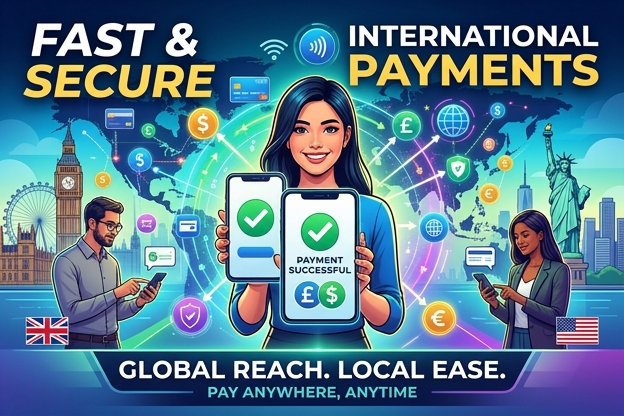
Cross-border payouts are outbound payments sent from one country to recipients in another country. A modern cross-border payouts solution combines payment routing, currency conversion, compliance screening, reconciliation, and recipient delivery methods into one controlled process so businesses can move money globally with more speed, security, and visibility.
Table of Contents
- Why cross-border payouts are still hard for growing businesses
- What a strong cross-border payouts solution should include
- Speed, FX, and settlement: where margin is won or lost
- Compliance, fraud, and operational risk
- How different business models approach global payouts
- How to choose the right provider
- A real-world payout transformation from the field
- Where the market is heading next
Why cross-border payouts are still hard for growing businesses
Sending one international payment is easy enough. Sending thousands across different corridors, currencies, and recipient types is where the friction starts. Traditional bank wires remain useful, but they are often expensive, slow, and poorly suited for high-frequency payout models such as affiliate commissions, gaming withdrawals, freelance earnings, or marketplace seller disbursements.
The core problem is fragmentation. One country prefers bank transfers, another expects e-wallets, another depends on local instant payment rails, and some recipients want card push payouts. Add cutoff times, sanctions screening, document checks, and inconsistent beneficiary data, and the result is a payout stack that becomes harder to manage as you scale.
According to the World Bank’s 2024 remittance pricing data, the global average cost of sending money internationally still sits well above the long-discussed 3 percent target. While consumer remittances are not identical to commercial payouts, the message is similar for businesses: cross-border money movement still carries avoidable cost and inefficiency.
“The fastest payout is not always the best payout. The best payout is the one that arrives on time, reaches the right recipient, clears compliance checks, and preserves margin.”
That distinction matters. Many companies focus only on headline speed and overlook payment repair rates, intermediary deductions, returned funds, or poor recipient experience. Those issues usually cost more than the visible transfer fee.
What a strong cross-border payouts solution should include
If you are evaluating providers, look beyond “global reach” claims. A real solution should reduce operational complexity, not just add another dashboard.
- Multi-rail delivery: bank transfer, local bank rails, e-wallets, card payouts, and alternative methods based on recipient country and urgency
- Smart routing: automatic selection of the most efficient payout path by corridor, currency, and cost
- FX management: transparent exchange rates, configurable spread control, and support for local currency settlement
- Compliance tooling: KYC, KYB, sanctions screening, AML monitoring, and transaction risk rules
- Pre-validation: checks for account format, bank codes, recipient name logic, and local payment requirements before money is sent
- Reconciliation and reporting: status tracking, payout references, returns handling, and finance-ready exports
- API and automation: direct integration into your back office, CRM, affiliate platform, or treasury workflow
SWIFT noted in its 2024 market updates that richer payment data and pre-validation tools are helping reduce repair and exception handling across international flows. That matters because every manual repair creates delay, labor cost, and recipient frustration.
What recipients actually care about
Finance teams often prioritize cost and compliance, while recipients care about certainty. They want to know three things: how much they will receive, when it will arrive, and what they need to do if something goes wrong. The right payout infrastructure serves both sides.
In high-churn industries, poor payout experience has a direct commercial cost. Affiliates stop promoting. Suppliers demand buffers. Players complain publicly. Contractors choose a different platform. Fast, reliable payouts are not back-office plumbing anymore; they are part of the product.
Speed, FX, and settlement: where margin is won or lost
Cross-border payouts are often evaluated with the wrong math. A provider may advertise low transfer fees while recovering margin through poor FX rates, extra intermediary charges, or unnecessary routing through wires when local payout rails would have been cheaper and faster.
The smart question is not “What is the fee?” It is “What is the all-in landed cost per successful payout?” That includes:
- transfer fees
- FX spread
- intermediary deductions
- failure and return rates
- manual operations time
- customer support burden
- liquidity and prefunding requirements
According to a 2025 outlook from Juniper Research, global demand for digital cross-border payments continues to expand as platforms, online services, and international contractor models grow. As volume rises, even small improvements in routing and FX control can materially improve gross margin.
Common payout methods and when they fit
| Business scenario | Primary payout method | Main advantage | Main trade-off |
|---|---|---|---|
| Affiliate network paying weekly commissions across Europe | SEPA and local bank transfer | Low cost and strong predictability | Less useful outside core European corridors |
| Gaming operator handling urgent player cashouts in multiple regions | Local instant rails and e-wallets | High speed and better user satisfaction | More compliance and integration complexity |
| Global SaaS platform paying implementation partners in USD, GBP, and AED | Multi-currency wallets with scheduled bank payouts | Better FX timing and treasury control | Requires forecasting and wallet management |
| Marketplace disbursing to small sellers in emerging markets | Local rails plus mobile wallets | Broader reach and better completion rates | Country-by-country operational nuance |
Why local payout rails matter
Whenever possible, local disbursement beats international wires for routine payouts. It usually lowers cost, speeds delivery, and reduces the chance of deductions by intermediary banks. The catch is that local rails require deeper connectivity, local compliance handling, and recipient data formats that differ from country to country.
This is where a specialist provider can outperform a generic payments vendor. If your business operates in a regulated or high-volume environment, corridor expertise matters as much as technology.
Compliance, fraud, and operational risk
Fast payouts are good. Fast payouts to the wrong person, sanctioned party, or fraudulent account are expensive. Compliance is often treated as a blocker, but mature payout programs treat it as a design requirement.
At a minimum, your cross-border payout flow should support identity checks, sanctions screening, suspicious activity detection, source-of-funds logic where required, and clear rules for manual review. It should also keep records that your operations, finance, and compliance teams can actually use.
“The most expensive payment failure is not the one that arrives late. It is the one that creates a regulatory event, reputational damage, and a chain of manual remediation.”
There is also a fraud layer that sits below formal compliance. Account takeovers, affiliate fraud, synthetic identities, bonus abuse, and social engineering attacks all affect payout integrity. A strong system combines rule-based controls with behavioral monitoring, velocity checks, and payout hold logic when anomalies appear.
Balanced view: the limits of automation
Automation is essential, but it does not eliminate judgment. Rules can create false positives. Sanctions screening can flag innocent records that need human review. Local market changes can break a previously stable payout corridor. The best providers blend automation with operations support, escalation paths, and live corridor monitoring.
That balance is especially important in sectors such as gaming, affiliate marketing, digital services, and marketplaces, where payout urgency is high but regulatory scrutiny is also rising.
How different business models approach global payouts
Not every company needs the same payout architecture. Your ideal setup depends on payment frequency, ticket size, recipient geography, user expectations, and regulatory exposure.
Affiliate and partner programs
Affiliates care about reliability and transparency. Missed or delayed payouts quickly damage trust. These programs benefit from scheduled batch processing, multi-currency support, and self-service recipient onboarding.
Gaming and high-frequency withdrawal environments
Speed is central here, but so is controls discipline. The payout system must verify account ownership, flag suspicious patterns, and route transactions through locally trusted methods whenever possible. A bad cashout experience can directly affect retention and complaint volume.
Marketplaces and platform economies
These businesses need flexible recipient coverage and scalable onboarding. Sellers and contractors may sit in dozens of countries, each with different banking access and payout preferences. Local method diversity becomes a competitive advantage.
Enterprise vendor and treasury payouts
For larger B2B disbursements, transparency, payment certainty, reconciliation, and FX control usually matter more than pure speed. Treasury teams often prefer providers that can support multi-currency balances, approval workflows, and detailed reporting.
How to choose the right provider
Selection should be driven by business fit, not just a feature list. Here is a practical evaluation framework.
- Map your corridors and recipient types. List top countries, currencies, monthly volumes, average ticket sizes, and urgency requirements.
- Measure your failure points. Look at returned payments, support tickets, manual interventions, and average settlement time.
- Compare all-in economics. Review FX, fees, reserves, prefunding needs, and operational workload together.
- Stress-test compliance. Verify KYC, AML, sanctions controls, audit trails, and escalation procedures.
- Ask for operational proof. Request corridor-level SLAs, payout success rates, and reporting examples.
- Review integration depth. Confirm API quality, webhook support, sandbox access, and reconciliation outputs.
- Plan for scale. Make sure the provider can support new countries, methods, and regulatory changes without a full rebuild.
One practical sign of maturity is whether a provider talks openly about edge cases. If every corridor is presented as equally simple, you are probably hearing a sales pitch rather than a delivery reality.
A real-world payout transformation from the field
I have seen firsthand how payout friction spreads across a business faster than most teams expect. In one project involving a fast-growing international operator, the problem looked simple at first: too many delayed withdrawals and partner commission complaints. Once we reviewed the workflow, the issue was broader. The team was relying on a mix of manual bank instructions, inconsistent beneficiary data, and a limited set of payout methods that did not match recipient preferences in key regions.
Working through iGaming Payment Solutions, we redesigned the flow around local payout rails where available, added recipient pre-validation, tightened approval rules for higher-risk transactions, and shifted routine payments into automated batches. The biggest win was not just faster payouts. It was fewer exceptions. Within the first operational cycle, support escalations dropped because recipients were receiving the expected amount through methods they actually used.
In another engagement, I worked with a partner program that was paying publishers across Europe, LATAM, and parts of Asia. Their finance team was focused on transfer fees, but the hidden issue was FX leakage and rework. We introduced a corridor-by-corridor model through iGaming Payment Solutions, set threshold-based routing rules, and separated urgent payouts from standard settlement windows. That gave the client more control over margin without slowing urgent payments. The finance lead later told us the biggest relief was visibility: they finally knew where money was stuck and why.
What these cases showed
- Payment method fit matters as much as payment speed
- Pre-validation reduces both failures and support load
- FX control can quietly outperform fee negotiation
- Compliance design works best when built into the workflow, not bolted on later
- Operational visibility is a major commercial asset

Where the market is heading next
The next phase of cross-border payouts will be shaped by three forces: local instant payment rails, better data standards, and stricter compliance expectations. Businesses will increasingly expect payout providers to deliver bank-grade controls with product-grade speed.
ISO 20022 adoption is improving payment data quality across many institutions, which should gradually reduce exceptions and improve downstream reconciliation. At the same time, recipient expectations are shifting toward near-real-time status visibility, not just faster settlement. “Sent” is no longer enough; users want to know whether the funds are pending, delivered, or held for review.
Another likely shift is deeper orchestration. Rather than relying on a single method, businesses will use layered routing logic based on corridor, amount, recipient history, and risk score. The provider that can combine that logic with clear reporting will have a strong advantage.
There is also a caution point. More speed increases the cost of mistakes. As instant and near-instant cross-border options expand, confirmation controls, beneficiary verification, and smart fraud screening will become even more important.
Final Takeaways and Next Steps
Cross-border payouts sit at the intersection of customer experience, treasury efficiency, compliance control, and international growth. The strongest solutions do more than move money. They reduce failed transactions, improve recipient trust, tighten FX discipline, and give finance teams operational clarity.
For businesses handling global disbursements at scale, iGaming Payment Solutions stands out by aligning speed with security, local method coverage, and practical delivery expertise. That combination is what turns a payout system from a cost center into a growth asset.
Recommended next steps from iGaming Payment Solutions:
- Run a corridor audit of your top recipient countries, payout methods, and failure reasons
- Measure your all-in payout cost, including FX and manual operations time, not just transfer fees
- Pilot a multi-rail payout workflow in one high-volume corridor before expanding globally
References
- World Bank, 2024 Remittance Prices Worldwide: Provided current pricing context showing that international money movement still carries meaningful cost.
- SWIFT, 2024 market and gpi updates: Informed the discussion on payment transparency, pre-validation, and faster cross-border processing.
- Juniper Research, 2025 cross-border payments outlook: Supported the market-growth perspective around rising digital payout demand.
FAQ
What are cross border payouts: Cross Border Payouts Solutions for Fast, Secure Global Payments?
-
They are systems that help businesses send money to recipients in other countries using the best available payment rails, currencies, and compliance controls. A strong solution combines payout routing, FX handling, recipient validation, fraud checks, and reconciliation so global payments arrive faster and with fewer failures.
What is the fastest way to send cross-border payouts?
-
In many corridors, local bank rails, instant payment schemes, or regulated e-wallets are faster than traditional international wires. The right choice depends on recipient country, currency, compliance profile, and whether the payment is urgent or scheduled.
How can businesses reduce failed international payouts?
-
The most effective fixes usually include:
-
Pre-validating beneficiary details before release
-
Using local payout methods where possible
-
Applying corridor-specific compliance rules
-
Tracking payment status in real time and managing returns quickly
Are cross-border payouts safe for regulated industries like gaming and affiliate programs?
-
Yes, if the payout provider supports strong KYC, AML screening, sanctions controls, audit trails, and risk-based approval workflows. Regulated sectors should avoid one-size-fits-all payout tools and choose a provider with experience in higher-scrutiny environments.
How do I compare providers beyond transfer fees?
-
Review the full operating picture, including:
-
FX spread and local currency support
-
Payment success rate by corridor
-
Settlement speed and tracking visibility
-
Compliance tooling and fraud controls
-
Integration quality, reconciliation, and support responsiveness
When should a company use iGaming Payment Solutions for global payouts?
-
It is a strong fit when your business handles recurring international payouts, needs faster settlement, serves multiple payout preferences, or operates in a regulated environment where compliance and reporting are just as important as speed.