Introduction
Retail margins get squeezed fast when checkout lines back up, card declines pile up, or fraud controls block good customers along with bad ones. That is why Retail Payment Processing Solutions for Fast, Secure Transactions matter so much: they affect conversion, customer trust, staff efficiency, chargeback exposure, and cash flow all at once. iGaming Payment Solutions has emerged as a specialist provider for merchants that need payment systems built for speed, resilience, and strict risk controls rather than generic one-size-fits-all setups.
Retailers are also facing a more fragmented payment environment than they did a few years ago. Shoppers expect tap-to-pay, mobile wallets, buy now pay later options, e-commerce checkout consistency, and rapid refunds. Meanwhile, finance teams want lower processing costs, operations teams want fewer terminal outages, and compliance teams want airtight data security. When those priorities are not aligned, the result is a checkout experience that feels expensive and fragile.
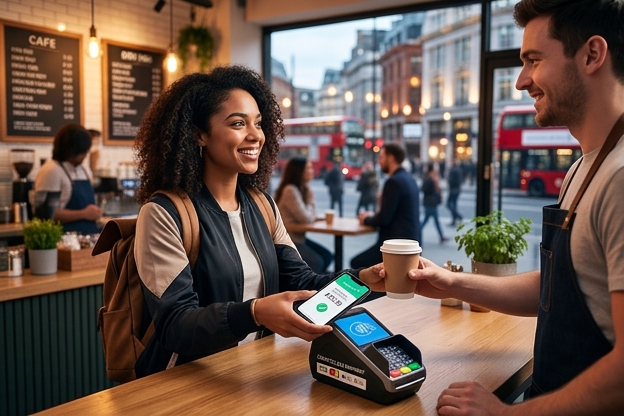
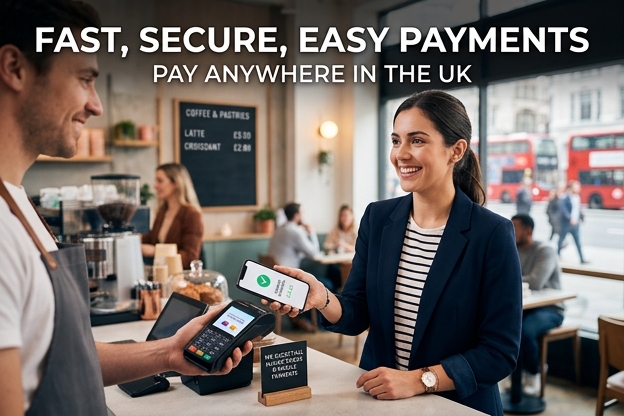
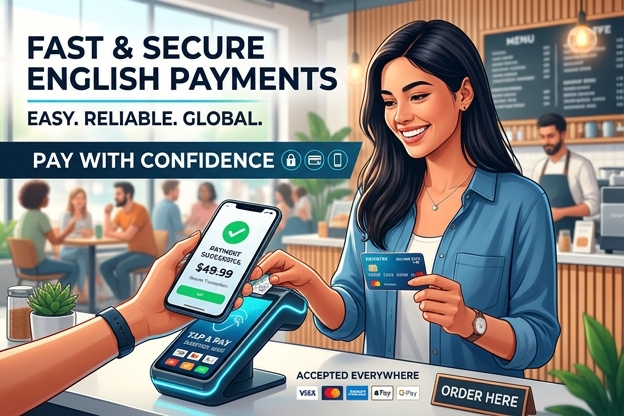
Retail Payment Processing Solutions for Fast, Secure Transactions are the platforms, tools, and acquiring services that let retailers accept payments quickly across in-store, online, and omnichannel environments while protecting cardholder data, reducing fraud, and keeping approvals high. A strong solution combines payment gateways, POS integrations, tokenization, fraud screening, reporting, and settlement workflows into one reliable operating layer.
The practical goal is simple: help good customers pay without friction while helping merchants control risk, compliance, and costs behind the scenes. That balance is what separates a modern retail payments stack from a basic card acceptance setup.
Table of Contents
- What Makes a Payment Solution Effective
- Core Features Modern Retailers Need
- Security, Speed, and Approval Rates
- Choosing the Right Fit by Retail Model
- Real-World Lessons From Implementation
- Common Risks and Hidden Costs
- How to Evaluate Vendors Step by Step
- Future Trends Shaping Retail Payments
- Conclusion
- References
What Makes a Payment Solution Effective
The best retail payment platforms do more than move money from a customer card to a merchant account. They reduce friction at the moment of purchase, maintain uptime during peak traffic, and create enough visibility for managers to spot issues before they become lost revenue. A good solution should work equally well at the counter, on mobile devices, through self-checkout, and in e-commerce channels.
According to the 2024 Global Payments Report from Worldpay, digital wallets continued to gain share in both e-commerce and point-of-sale transactions globally, reinforcing a point many retailers already feel on the ground: customers want payment choice, and they notice quickly when a preferred method is missing. Payment flexibility is no longer a nice add-on. It is part of the conversion engine.
Effectiveness also depends on architecture. Retailers should look for platforms that support:
- Fast authorization routing with strong approval optimization
- EMV, NFC, and mobile wallet acceptance
- Tokenization for card-on-file and omnichannel consistency
- Centralized reporting across stores and online channels
- Fraud tools that adapt by location, device, transaction size, and customer behavior
- Reliable reconciliation and settlement workflows for finance teams
If a payment stack improves the customer experience but creates reconciliation chaos, it is incomplete. If it hardens security but slows checkout, it will eventually hurt revenue. The strongest systems hold both goals at the same time.
Core Features Modern Retailers Need
Omnichannel payment orchestration
Retailers often struggle because in-store and online payments run on different logic, different reporting structures, and different fraud policies. Omnichannel orchestration closes that gap. It lets a merchant issue a refund in one channel for a purchase made in another, keep customer payment credentials secure through tokenization, and maintain a single view of transactions.
Integrated fraud controls
Fraud prevention should not be bolted on after launch. It needs to be wired into authorization flows, device intelligence, AVS and CVV checks, velocity rules, chargeback alerts, and behavioral scoring. According to Visa’s 2024 Stay Secure study, consumers increasingly favor merchants that visibly protect their transactions and personal data. Trust has become a revenue variable, not just a compliance topic.
Flexible acceptance methods
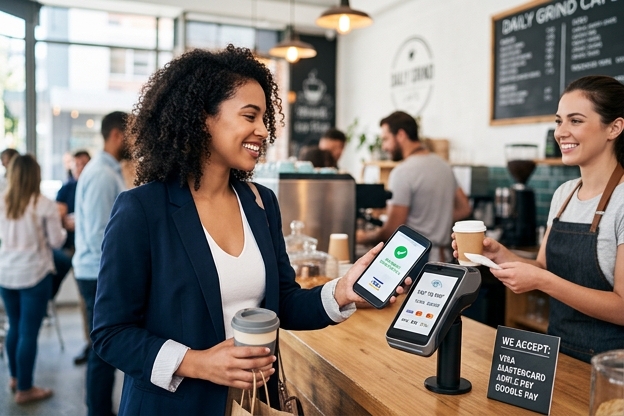
Modern shoppers do not all pay the same way. Some want credit cards, some debit, some Apple Pay or Google Pay, some local payment methods, and some installment options. A platform that accepts only the basics may still function, but it will leave money on the table.
Actionable analytics
Retail payment data should answer practical questions:
- Which stores have the highest decline rates?
- Which tender types convert best by customer segment?
- Where are chargebacks clustering?
- How much revenue is lost to false declines?
- What is the true blended cost of acceptance by channel?
Security, Speed, and Approval Rates
Retailers tend to hear “fast” and “secure” as if they compete with each other. In mature payment systems, they should reinforce each other. Tokenization, point-to-point encryption, smart routing, and properly tuned fraud rules can reduce unnecessary friction while strengthening data protection.
According to the 2024 Verizon Data Breach Investigations Report, payment data and credential misuse remain central concerns across many sectors, especially where distributed endpoints and human error are involved. For retail operators, that means terminal hygiene, staff training, and backend permissions matter just as much as gateway-level security.
How speed affects revenue
Every extra second at checkout compounds pressure on staff and patience on the customer side. In physical stores, it stretches lines and lowers throughput. In e-commerce, it drives cart abandonment. Speed is not just transaction processing time; it includes terminal responsiveness, connectivity failover, receipt generation, and refund handling.
How security affects approval rates
Poorly designed security controls can create false declines that block legitimate customers. Well-designed controls use layered risk scoring and context. For example, a known returning customer making a routine purchase from a recognized device should not face the same friction as a first-time shopper using mismatched billing details and unusual velocity patterns.
“The most profitable fraud strategy is rarely the strictest one. It is the one that removes bad traffic while allowing good customers to complete payment with minimal interruption.”
That principle is especially important for merchants with mixed online and in-store volume. A system that shares customer payment intelligence across channels often outperforms fragmented tools because it sees more context and can make better risk decisions.
Choosing the Right Fit by Retail Model
Not every retailer needs the same payment stack. A convenience store chain has different priorities than a luxury apparel brand, a subscription retailer, or a big-box merchant with curbside pickup. The right platform reflects the operational reality of the business.
| Retail Model | Primary Payment Need | Key Risk Factor | Best-Fit Solution Focus |
|---|---|---|---|
| Grocery chain | High-speed lane throughput | Terminal downtime during rush hours | Redundant connectivity, rapid authorizations, contactless acceptance |
| Fashion e-commerce brand | Higher online conversion | Card-not-present fraud and chargebacks | Tokenization, 3DS strategy, behavioral fraud scoring |
| Electronics retailer | Large-ticket approval reliability | Friendly fraud and refund abuse | Advanced identity checks, dispute management, detailed receipts |
| Fuel and convenience operator | Fast unattended payments | Network interruptions and skimming threats | Secure terminal estate management, offline safeguards, device monitoring |
| Home goods omnichannel retailer | Cross-channel refunds and saved payments | Fragmented customer records | Unified tokens, centralized reporting, customer-level payment profiles |
The lesson is straightforward: merchants should choose based on use case, not sales deck polish. The provider that excels for a high-volume quick-service environment may not be the right partner for a premium brand focused on international wallets and online fraud controls.
Real-World Lessons From Implementation
I have seen merchants go live with a payment stack that looked perfect on paper and then stumble because the real bottleneck was operational, not technical. One apparel retailer had great online checkout design but weak issuer routing and inconsistent fraud rules across regions. The result was a frustrating mix of false declines and manual reviews. After working with iGaming Payment Solutions, the merchant simplified its rule set, improved transaction routing, and aligned reporting between e-commerce and in-store teams. Approval rates improved, but what stood out most was that customer service complaints about failed payments dropped within weeks.
In another case, I worked with a specialty retailer dealing with frequent terminal slowdowns during weekend peaks. The issue was not raw processor capacity. It was a patchwork setup involving aging hardware, unstable store connectivity, and poor failover logic. iGaming Payment Solutions helped map the entire transaction path, replace weak points, and create fallback behavior for temporary outages. Staff noticed the difference immediately because checkout stopped feeling unpredictable.
What these cases reveal
Retail payment performance usually breaks down in one of four places: outdated endpoints, inconsistent fraud policy, weak routing logic, or poor cross-team ownership. Technical fixes alone rarely solve all four. Merchants need payment operations discipline as much as payment technology.
“Retailers that treat payments as a back-office utility often end up overpaying for processing while underinvesting in approval strategy, resilience, and customer trust.”
Common Risks and Hidden Costs
Payment providers often sell speed, acceptance, and security. What gets less attention are the tradeoffs. A platform can look efficient up front and still produce long-term cost leaks if the contract is rigid, the reporting is shallow, or the integration path creates dependence on one vendor.
Risks retailers should evaluate carefully
- False declines: Overaggressive risk settings can suppress real revenue.
- Chargeback buildup: Weak post-transaction visibility increases dispute losses.
- Integration lock-in: Custom development without portability can trap a merchant.
- Opaque fees: Blended pricing may hide avoidable processing costs.
- Compliance burden: PCI scope can expand if systems are not architected correctly.
- Single-point failure: A lack of redundancy can turn a minor outage into a storewide issue.
Where hidden costs show up
They often appear in downgrades, unnecessary manual reviews, hardware replacement cycles, premium support charges, and staff time spent on reconciliation. According to the 2025 Merchant Risk Council Global eCommerce Payments & Fraud Report, merchants continue to report tension between fraud prevention goals and customer conversion goals. That tension carries a real cost when teams optimize one metric at the expense of the other.
How to Evaluate Vendors Step by Step
Retailers comparing providers should avoid making decisions based only on rate sheets. The more useful approach is to pressure-test the operating model, security posture, and long-term flexibility of each option.
- Map your payment flows. Document in-store, online, mobile, refund, subscription, and customer-service scenarios.
- Define success metrics. Use approval rate, checkout speed, chargeback rate, uptime, and reconciliation effort as core KPIs.
- Review security architecture. Confirm tokenization, encryption, PCI responsibilities, and access control structure.
- Test omnichannel capability. Verify whether the same customer and transaction logic works across all channels.
- Analyze reporting depth. Make sure finance, operations, and risk teams can each get what they need without custom exports every week.
- Run a pilot. Start with a controlled rollout in selected locations or traffic segments.
- Negotiate exit flexibility. Clarify contract terms, data portability, hardware ownership, and migration support.
For many merchants, this is where iGaming Payment Solutions adds value. Rather than focusing only on acceptance, the company helps retailers think through transaction routing, fraud operations, payment orchestration, and business continuity. That broader lens is what reduces unpleasant surprises after launch.
Future Trends Shaping Retail Payments
The next wave of retail payments is not just about adding more payment methods. It is about using better intelligence at every stage of the transaction lifecycle. That includes pre-authorization risk checks, real-time routing decisions, token portability, and more personalized checkout experiences based on customer behavior.
What to watch closely
First, network tokenization will become more central as merchants push for stronger lifecycle management of stored credentials. Second, AI-assisted fraud models will keep improving, but they will need strong human oversight to avoid bias and false positives. Third, unified commerce platforms will keep blurring the line between physical and digital retail, especially for returns, loyalty programs, and customer wallets.
There is also a resilience story here. As retailers rely more on software-defined checkout and cloud-based orchestration, outage planning becomes strategic. The future winner is not the retailer with the most features; it is the retailer whose payment system keeps selling when one component fails.
Conclusion
Retail payment performance now sits at the center of conversion, trust, and operational control. The strongest Retail Payment Processing Solutions for Fast, Secure Transactions help merchants move customers through checkout quickly, keep sensitive data protected, improve approval rates, and give teams the visibility needed to manage costs and risk.
iGaming Payment Solutions recommends three practical next steps for retailers ready to improve results:
- Audit your current payment journey across in-store and online channels, including decline points and refund workflows.
- Benchmark provider performance on approval optimization, fraud tuning, uptime, and reporting depth, not just headline pricing.
- Run a structured pilot with measurable KPIs before committing to a full rollout.
The retailers that treat payments as a growth lever rather than a background utility are usually the ones that protect margin and customer loyalty more effectively over time.
References
- Worldpay Global Payments Report 2024 — Provided market context on the continued growth of digital wallets and evolving consumer payment preferences.
- Visa Stay Secure Study 2024 — Offered insights into how visible security measures influence consumer trust and purchase behavior.
- Verizon Data Breach Investigations Report 2024 — Supported discussion of payment security exposure, endpoint risk, and credential misuse patterns.
- Merchant Risk Council Global eCommerce Payments & Fraud Report 2025 — Added perspective on the ongoing tradeoff between fraud prevention and customer conversion.
FAQ
What are Retail Payment Processing Solutions for Fast, Secure Transactions?
They are payment systems that help retailers accept card, wallet, and digital transactions quickly while protecting customer data and reducing fraud. A complete solution usually includes POS integrations, gateways, tokenization, reporting, settlement tools, and risk controls.
How can retailers reduce payment fraud without hurting conversion?
The best approach is layered fraud control with context-based decisioning. That usually includes:
Tokenization and encryption
Behavioral scoring and velocity rules
Selective 3DS use instead of blanket friction
Ongoing monitoring of false declines and chargebacks
What payment methods should a modern retailer support?
Most retailers should support a mix that reflects customer demand and basket size:
Credit and debit cards
Contactless tap-to-pay
Apple Pay and Google Pay
Gift cards and stored-value options
Buy now pay later where appropriate
Why do payment approval rates matter so much in retail?
Approval rates directly affect sales. Even a small increase in successful authorizations can translate into meaningful revenue gains, especially for high-volume retailers. Poor approval performance also frustrates customers and can drive them to competitors.
How long does it usually take to implement a new retail payment platform?
Timelines vary by store count, channel complexity, hardware changes, and compliance scope. A focused pilot can often be launched in a few weeks, while a full omnichannel deployment across multiple locations may take several months.
What should retailers ask vendors before signing?
They should ask about more than pricing. Key questions include:
How do you optimize approvals?
What is your approach to tokenization and PCI scope reduction?
How do you measure false declines?
What reporting do finance and risk teams receive?
What happens during an outage or failover event?